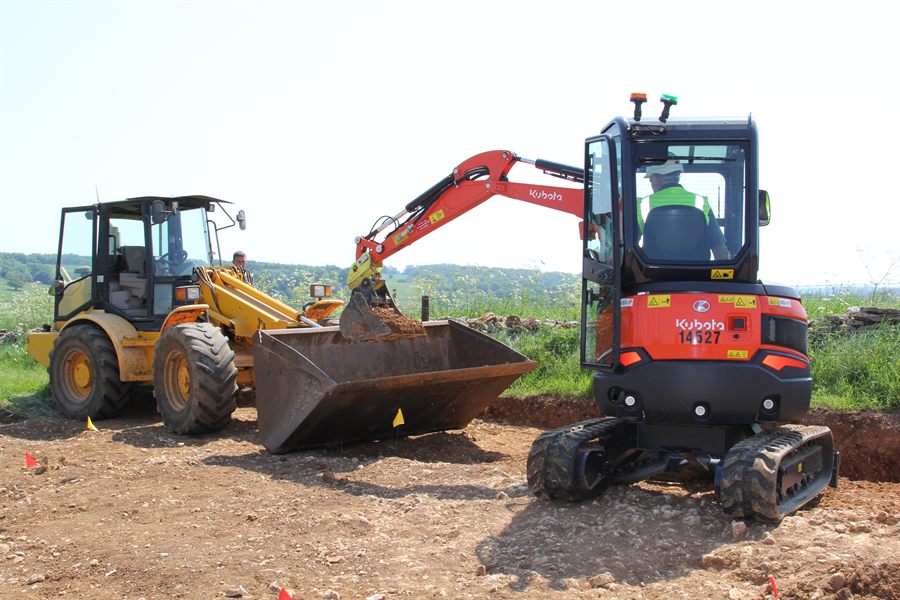
The JCB TM270 and Kubota U27-4 made odd bedfellows, but a great, improvised partnership.
Long-form investigations, multi-part machinery projects and deep-dive reports from the Farm Machinery Journal team — the stories that need more than a few pages to tell.

Supporting the Cotswolds dig — Corinium Museum
“Don't miss our unique and exclusive projects involving an eclectic range of machinery, often adapted for a task other than their original intended purpose.”
Something slightly different: an exclusive report on the excavation of an ancient Celtic ceremonial site in the Cotswolds. Featured on BBC TV, and with an unusual duo of machines — a 51-reg JCB TM270 telehandler teamed up with a Kubota mini-excavator.
Our reporter was hosted by Professor Mark Horton and his team of archaeologists from the Royal Agricultural University, formerly of the TV series Time Team and Coast. For the full report on how this unusual pair of bedfellows played its part in revealing a rare archaeological site occupied 2,000 years ago by the Dobunni tribe, don't miss the September issue of FMJ.
Turn through the pages of the special report exactly as it appeared in the magazine.


Click the pages to open the full-screen reader. Use the arrow keys, or the buttons above, to turn the pages.
The JCB TM270 and Kubota mini-excavator at work opening the test trench.
On site hauling, dumping and spreading with a 51-reg JCB TM270 telehandler
The machinery objectives for the archaeological excavation were set out as initial clearance of the topsoil, then cutting a test trench to expose the archaeology and further intricate site work. Finally, return the soil and turf to return the site to its original condition. This 25-year old JCB TM270 was more than capable of switching tasks from its usual, everyday agricultural functions to the task for hauling, dumping and spreading duties on the dig. A real life modern classic hero!
Operator verdict – an archaeological site has its own challenges, both in terms of machine performance and safety. The even weight distribution across the machine due to the central pivot and articulation gave comfortable ground contouring on the uneven terrain of the dig zone and spoil area. This was complimented by an admirable performance as regards the lift capacity with well over 2-tonnes capacity. Once designated to the dig, the clean grain bucket was exchanged for a second-hand 2c.m bucket.
Great all round visibility from the cab and a high sitting position gave a clear all round view around both the machine and the bucket. This is particularly important as regards safety conditions on a dig site with archaeologists in attendance.
Conclusion – superior service for a machine with 25 years behind it. The TM270 proved itself in its unorthodox dual role as a wheeled loader as opposed to its more usual agricultural role around the farm. An unconventional but innovative choice, and a great alternative to a site dumper. The TM270 looks like a bolt-on choice for a return dig.
The JCB TM270 and Kubota U27-4 made odd bedfellows, but a great, improvised partnership.
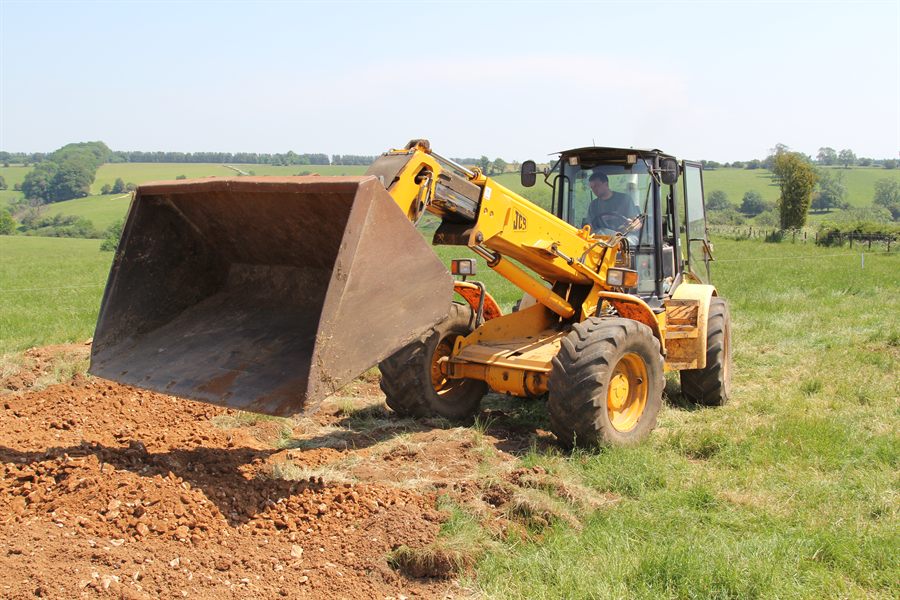
JCB TM270 pivot steer hauling to the spoil heap.

Kubota U27-4 is an ideal machine for the precision operation due to its electronic joystick controls.

Kubota U27-4 cutting out a trench to look at the archaeology of the site.
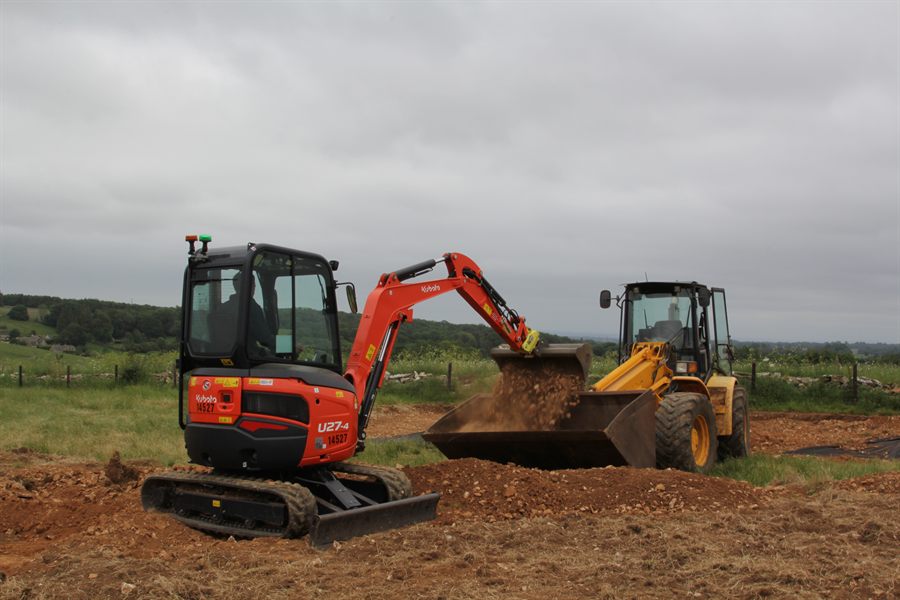
Loading up for the backfill operation.

JCB TM270's large bucket made short work of backfilling the site.
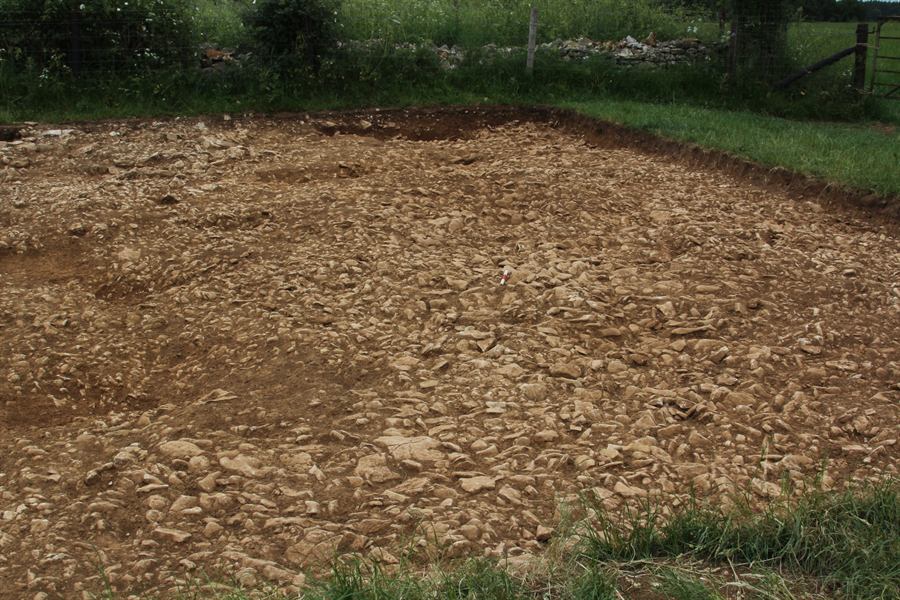
Processional cobbled pavement was the main physical feature of the site. Extensive wear suggests that a form of mass processional activity had taken place around a central scarred area.
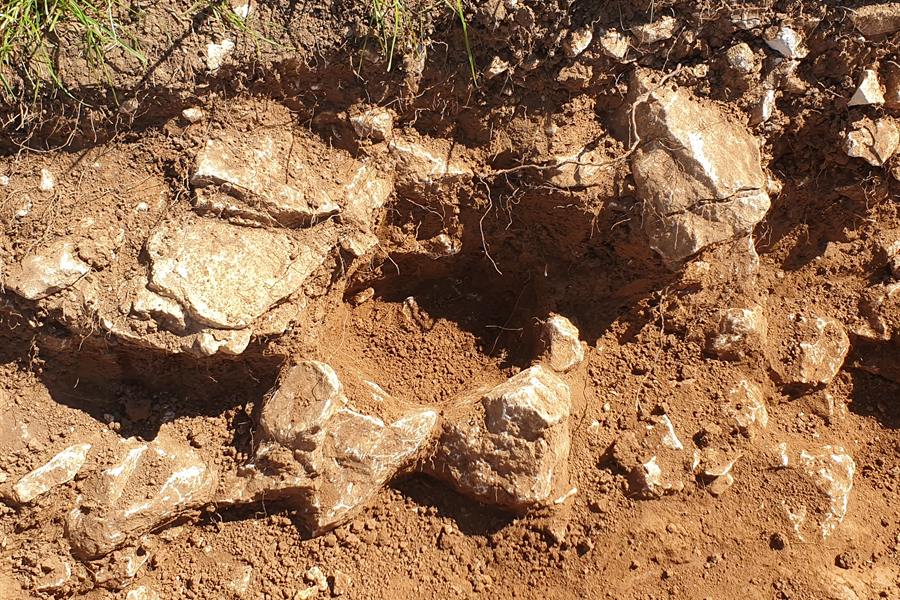
Onsite posthole indicating the former presence of a structural wooden post. Timber itself has decayed, but the hole dug leaves a scar. Wedged stones around the base gave stability to the post.
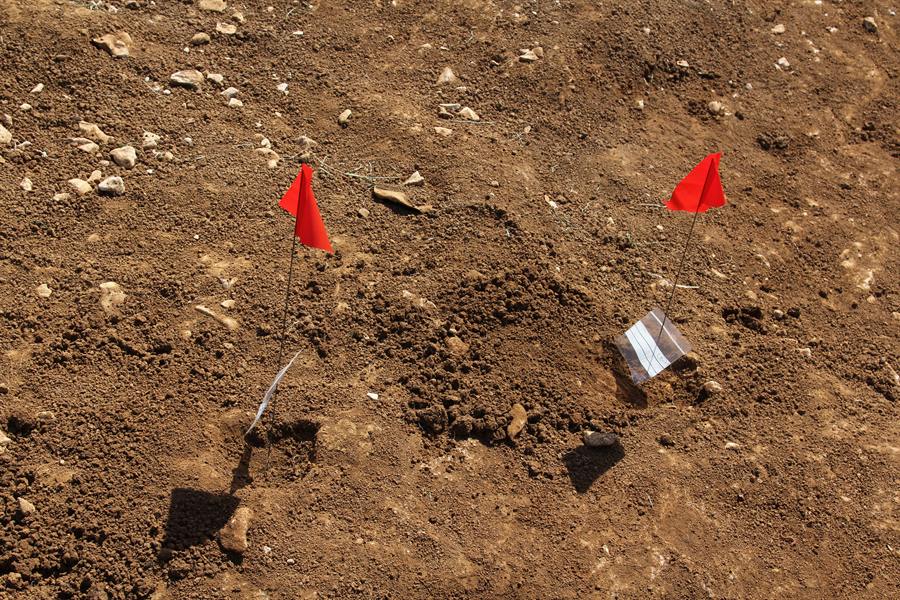
As soon as a metal detector signals a high conductivity hit, a flag is immediately placed to mark the spot. Marker flags pinned into the ground are used to map out finds and observe potential spatial patterns.

Much of the work required painstaking and intricate digging by hand trowel, combining traditional methods with state of the art planning technology, such as drones.

Celtic miniature bronze weapons such as this tiny spearhead shown in situ served as votive offerings and were deliberately placed, often vertically, into the ground during the Iron Age.

The most significant Roman find being a singular coin depicting the head of Claudius, emperor at the time of the invasion, suggesting this may have been a respectful offering.

Miniature spearheads, swords and shields together with numerous coins were declared as treasure and are now awaiting display at the Corinium Museum in Cirencester.
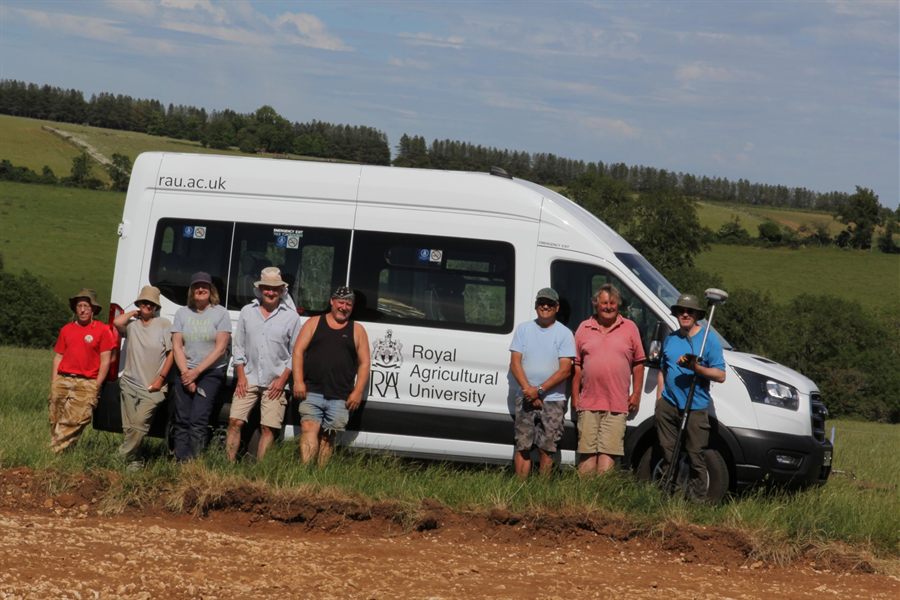
With thanks to Professor Mark Horton and his team of archaeologists at Royal Agricultural University, metal detectorists Pete Twinn and Ken Haughton, and finally the landowner, Pete Charles, and his family.
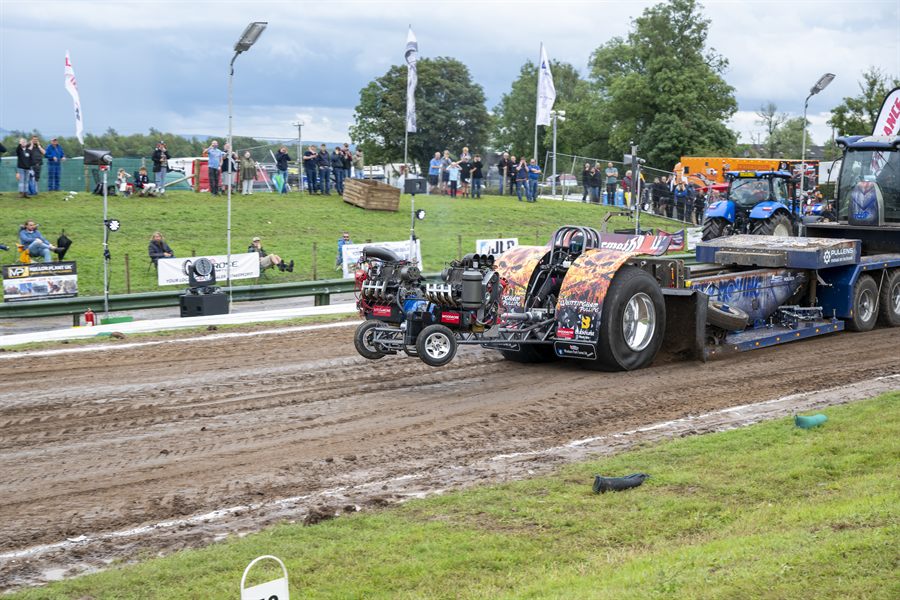
Tractor pulling is often described as the world's most powerful motorsport. Over the August bank holiday weekend, FMJ's David Laley — AKA The Tractor Twitcher — was trackside at the epic North West Euro Pull, organised and hosted by the North West Tractor Pulling Club at Great Eccleston.
The event comprised rounds from the Power Pulling Association and the British Tractor Pulling Association's championships, along with rounds of the European Tractor Pulling Committee's EuroCup. David has been photographing farm machinery of all types and ages for 30 years, and he'll be following all of the BTPA points pulls and accompanying PPA and European Championship rounds in the UK next year — so this report will keep growing.
The Tractor Twitcher's report from Great Eccleston, exactly as it appeared in the November issue.

Click the page to open the full-screen reader. A further four-page feature follows once the November issue leaves the shelves.
David's notes on six of the machines that made the weekend.
The high-horsepower machines of the pulling paddock, dealt out like a hand of Top Trumps. Click any portrait to see it full size. We'll add a new card every time David gets trackside — through all of next year's BTPA points pulls and the PPA and European championship rounds that run alongside them.

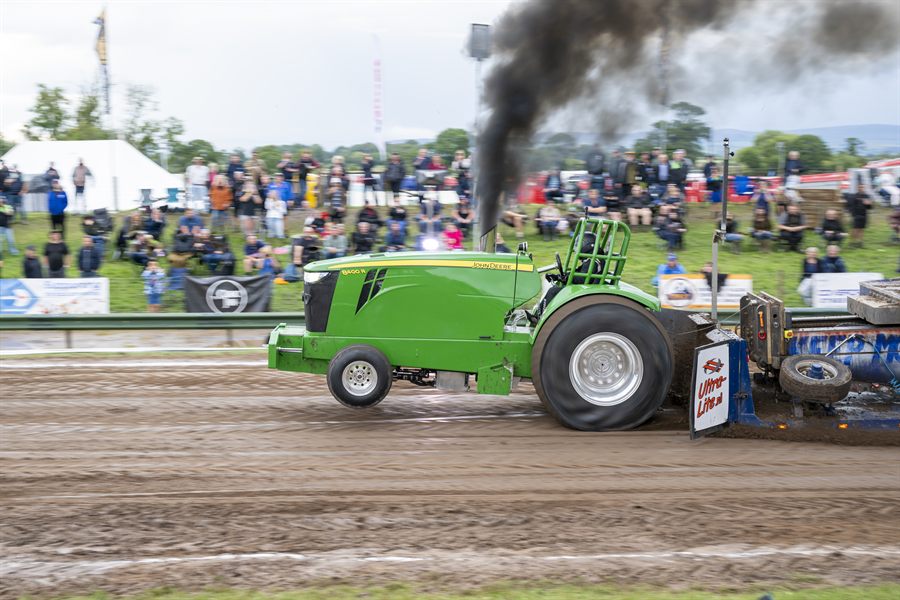


David is building the rest of the pack — nicknames, horsepower and spec for each of the pulling paddock's heavy hitters, added as he follows the championships through next year.
Smoke, sand and serious horsepower. David shot the whole Euro Pull weekend, and further pictures join the Puller Profiles above as the championships roll on — alongside the full four-page feature once the November issue is off sale.
A four-page tractor pulling feature follows once the November issue leaves the shelves, we're returning to the Cotswolds dig for a second season, and more projects are in production. This section will grow as each one is published.
A full four-page report on the Great Eccleston Euro Pull, online once the November issue is off sale.
In productionWe go back to the Celtic site for a second season of excavation starring our real-life modern classic hero JCB TM270.
In productionA data-led look at the UK farm machinery market.
In productionRestoring something rare, running a machine to a serious hour count, putting a machine to a job it was never designed for, or trialling new technology on farm? We'd like to hear about it. Email editor@farmmachineryjournal.co.uk with a few details and a photo or two.